
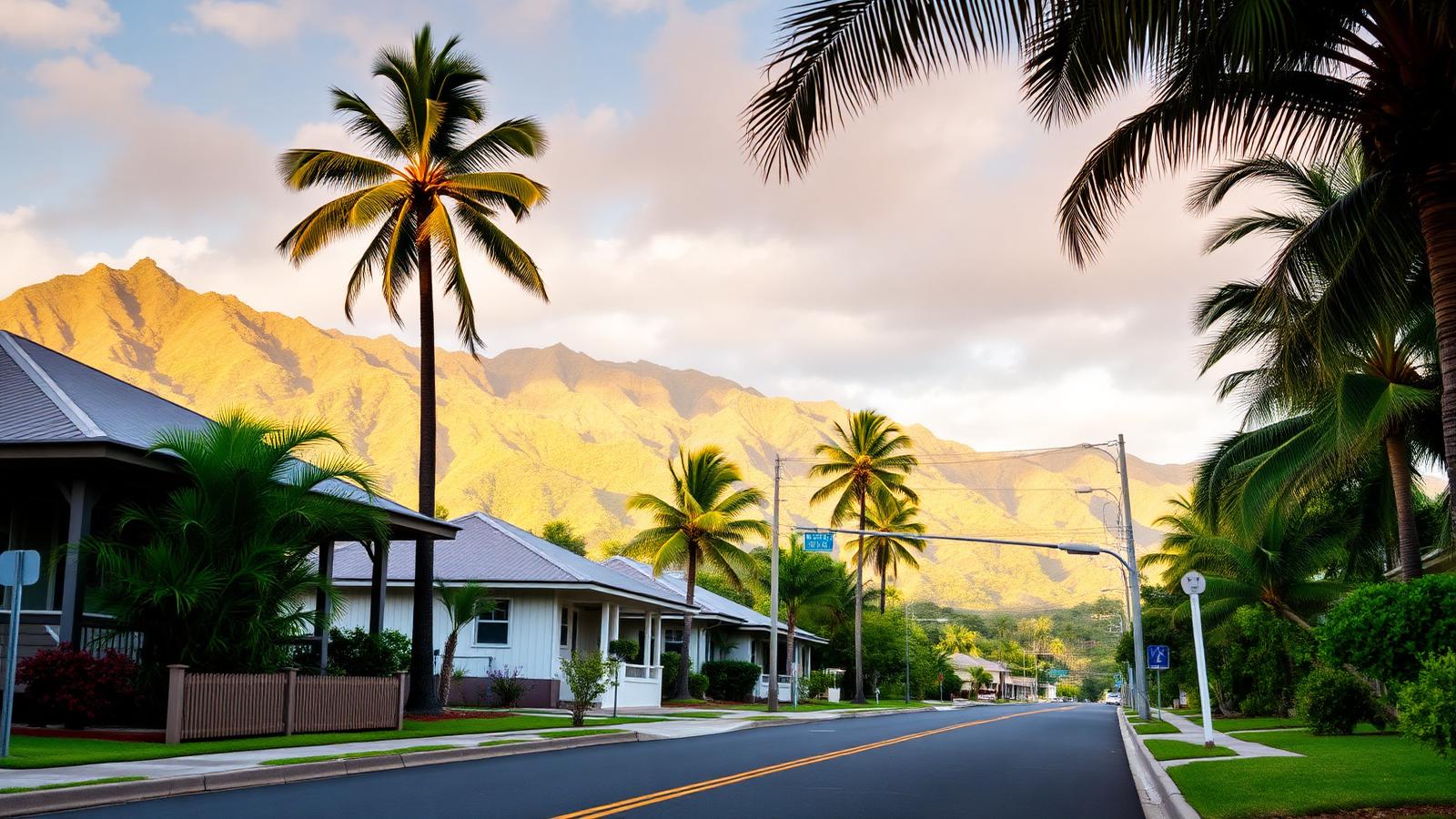
Moving from California to Hawaii
What Your California Equity Buys in Hawaii
A straight comparison of price, space, taxes, and monthly cost, plus a closing cost credit when you buy in Hawaii.
Equity comparison
California versus Hawaii, side by side
- Typical home price
- $785,000
- $845,000
- Square footage
- 1,650 sq ft
- 1,350 sq ft
- Annual property tax
- $8,600 / year
- $3,000 / year
- Estimated monthly payment
- $4,900
- $5,300
Illustrative medians, replaced with your own numbers in the personalized equity report. Hawaii is the one destination where the table usually runs the wrong way: less house, similar or higher price. The property tax line is genuinely low, which is the single place the math favors you.
Why California homeowners choose Hawaii
Start with the truth this page exists to tell: leaving California for Hawaii is almost never a trade up on price. You will generally get a smaller, older home for the same money or more, and the day-to-day costs that follow a house here are the highest in the country. If your goal is to convert coastal equity into space and margin, look at Nevada or Idaho instead.
What you are actually buying is a place, and for a specific kind of household that is a rational purchase. People move here for family already on-island, for a job at a hospital or base or university, or because they have decided the rest of their life happens near water. Those are good reasons. Saving money is not one of them.
Two things mainland buyers routinely miss. First, leasehold property is still common, especially on Oahu, and a leasehold listing looks like a bargain until you read the lease expiration and the renegotiation clause. Second, single-wall construction, the older plantation-era framing with no interior stud cavity, is widespread and it changes what insurers will write, what lenders will finance, and what a renovation costs.
Cost of living versus California
Hawaii is the only state where a California household should expect nearly every line item to increase. Groceries arrive by container, electricity is generated largely from imported oil, and a gallon of gas has been persistently above the mainland average for decades.
The offsets are real but narrow: property tax rates are among the lowest in the nation, heating costs essentially do not exist, and many households drop to one car or drive far fewer miles. None of that closes the gap on its own.
- Overall cost index vs California
- Higher
- Median housing cost
- Higher than most California metros
- State income tax
- Graduated, top rate 11%
- Average residential electricity rate
- Highest in the nation
Taxes: what actually changes
Hawaii's top income tax bracket is the highest of any state, and recent reform widened the lower brackets rather than cutting the ceiling. A high earner leaving California's top bracket should not expect relief here.
Property tax is the exception and it is a large one. County rates, particularly Honolulu's owner-occupant classification, are the lowest in the country, and the home exemption for owner-occupants, which increases for older owners, cuts the assessed value further.
There is no general sales tax. Instead the general excise tax applies broadly to services and rent as well as goods, and it is typically passed through to the consumer, so it touches more of your budget than a sales tax would.
Hawaii does levy an estate tax above a state-level threshold, which matters for households moving significant assets.
The housing market
Inventory is structurally thin. Land is finite, entitlement is slow, and a meaningful share of the standing stock is held as second homes or short-term rentals, which counties have been steadily restricting. That policy churn moves values on specific streets, not just in specific towns.
Condominiums dominate the accessible price points, and this is where mainland buyers get hurt. Association fees are high, and post-Surfside lending rules mean a building with deferred maintenance or an underfunded reserve study can become unfinanceable, which strands both buyers and sellers. Read the reserve study before the inspection report.
Neighbor island markets, on Hawaii Island in particular, include lava hazard zones where insurance availability rather than price is the binding constraint.
Where people land in Hawaii
Kailua, Oahu
Where mainland professionals with base or hospital ties concentrate, at a steep premium.
Mililani
Planned central Oahu community with the closest thing to a mainland suburban layout.
Kihei, Maui
Drier south shore with the island's deepest condo inventory and its clearest short-term rental rules.
Waimea, Hawaii Island
Upcountry ranch town, cool and green, popular with the observatory and medical crowd.
Hilo
The most affordable real town in the state, with the rainfall to explain why.
Lihue, Kauai
Practical island base near the airport and hospital rather than a resort address.
Get an honest read on a Hawaii purchase
We will run your equity report against real Hawaii numbers, including the ones that make this a harder move, and introduce you to a vetted local agent. A closing cost credit applies at purchase. Free, and there is no obligation.
Start your Hawaii move
Four short questions. We use them to decide which agent fits your move, and to build your equity report.