
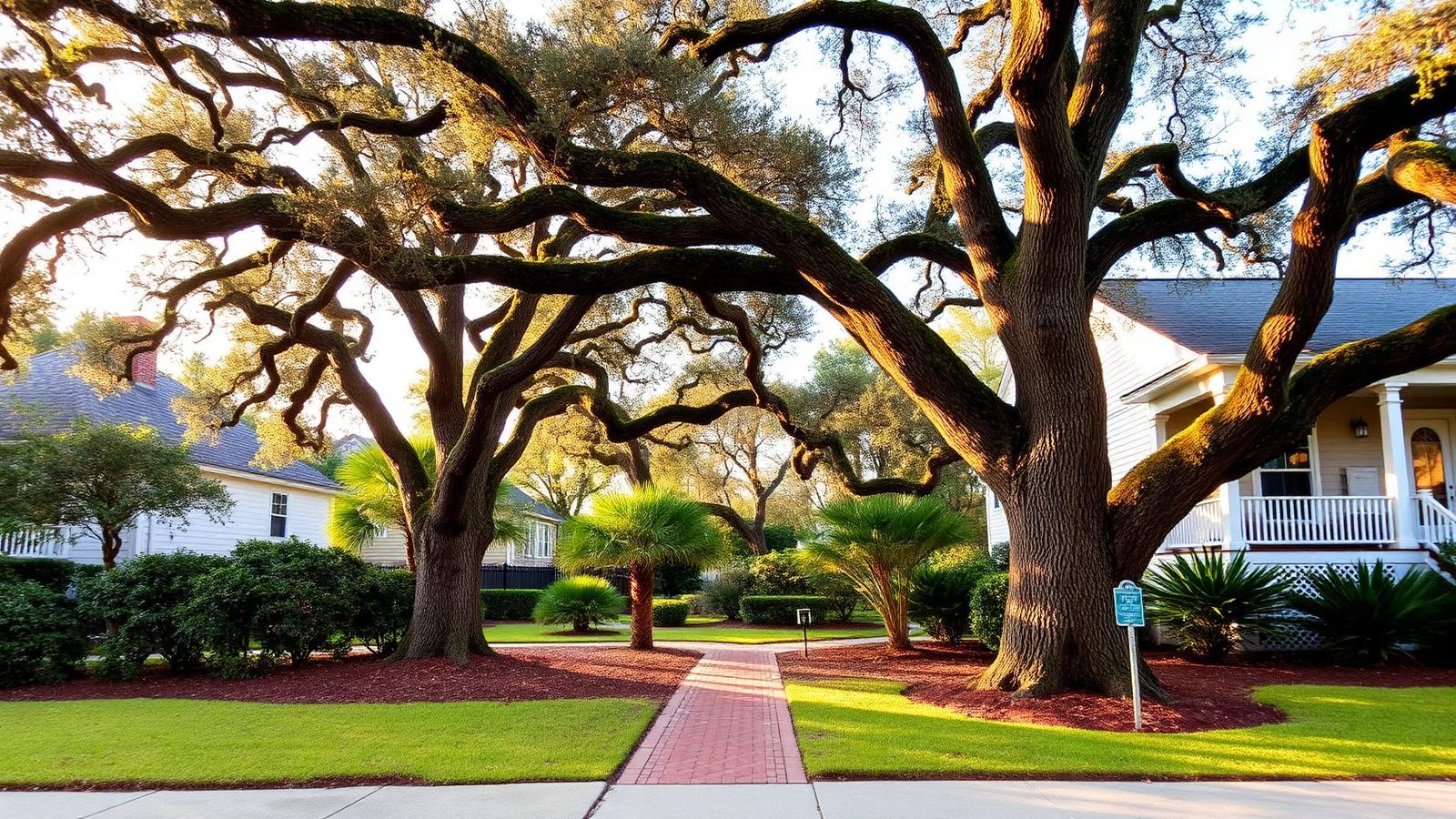
Moving from California to South Carolina
What Your California Equity Buys in South Carolina
A straight comparison of price, space, taxes, and monthly cost, plus a closing cost credit when you buy in South Carolina.
Equity comparison
California versus South Carolina, side by side
- Typical home price
- $785,000
- $370,000
- Square footage
- 1,650 sq ft
- 2,100 sq ft
- Annual property tax
- $8,600 / year
- $2,000 / year
- Estimated monthly payment
- $4,900
- $2,600
Illustrative statewide medians, replaced with your own figures in the equity report. The tax figure assumes the 4% primary residence assessment ratio, which you must apply for and which does not apply to a second home.
Why California homeowners choose South Carolina
South Carolina is the quieter alternative to Florida for Californians who want warm weather, water, and no state tax on Social Security, without Florida's insurance market or its density. Charleston and the Greenville upstate are two completely different propositions and most people should look at both.
Where it falls short: wages and job depth outside Greenville's manufacturing corridor and Charleston's port and aerospace cluster are limited, public school performance varies enormously by district rather than by town, and summer humidity from June through September is heavier than most Westerners have experienced. Coastal counties also carry hurricane exposure and wind and hail deductibles priced as a percentage of coverage.
The detail that changes the numbers: South Carolina assesses an owner-occupied primary residence at 4% of value while second homes, rentals, and out-of-state-owned property are assessed at 6%, and the primary rate also exempts school operating millage. You must file for it with the county, and buyers who do not can pay well over double the expected bill in year one. Second, much of the Lowcountry sits at very low elevation, so flood zone and tidal flooding history matter street by street in downtown Charleston. Buyers comparing the Southeast usually weigh North Carolina and Tennessee at the same time.
Cost of living versus California
South Carolina is one of the least expensive states Californians seriously consider, with the caveat that the coastal resort markets, Charleston, Kiawah, and Hilton Head, price like resort markets and not like the rest of the state.
Utilities run above the regional average because summer cooling loads are high and the state's electricity rates are not cheap, so the low property tax bill is partly offset on the monthly statement.
- Overall cost index vs California
- About 34% lower
- Median housing cost
- About 53% lower
- Primary residence assessment ratio
- 4% of value, versus 6% otherwise
- Top state income tax rate
- Around 6.2% and stepping down
Taxes: what actually changes
The income tax has a graduated structure with a top rate in the low sixes that legislative triggers continue to reduce. It is a clear improvement over California's upper brackets but not the zero of Tennessee or Florida.
Retirement treatment is the state's strongest feature. Social Security is not taxed at all, there is a general retirement income deduction, and residents 65 and over get a larger deduction against all income, which makes the effective rate for many retirees very low.
Property tax is among the lowest in the country for owner-occupants because of the 4% ratio, commonly landing near 0.45% to 0.55% effective. In exchange, the state taxes vehicles annually through the county, which is a bill California movers do not expect. There is no estate tax.
The housing market
The Charleston metro builds heavily in Summerville, Nexton, and Cane Bay, and much of that inventory sits inside special tax districts or carries HOA and amenity fees that add materially to the monthly cost. The Greenville upstate has more established housing stock and a steadier, less speculative market.
Coastal inventory takes longer to move than it did during the boom and sellers are negotiating again, which pairs well with a closing credit.
Two local issues: the Lowcountry has expansive clay and high water tables, so raised slab or crawl space construction and drainage details matter more than in the West, and termite bonds are standard practice throughout the state, so ask whether an active bond transfers with the house.
Where people land in South Carolina
Greenville
Revitalized downtown on the Reedy River, the strongest inland job market in the state.
Mount Pleasant
Charleston's best-regarded schools, where most relocating families with children land.
Summerville
New construction inland of Charleston, well outside the worst storm surge zones.
Bluffton
Between Savannah and Hilton Head, the practical alternative to island pricing.
Aiken
Horse country near Augusta, mild winters, long-established retiree community.
Travelers Rest
Small town at the head of the Swamp Rabbit Trail with Blue Ridge access.
See what your California equity buys in South Carolina
Get your personalized equity report, an introduction to a vetted South Carolina agent, and a closing cost credit at your purchase. Free, and there is no obligation.
Start your South Carolina move
Four short questions. We use them to decide which agent fits your move, and to build your equity report.