
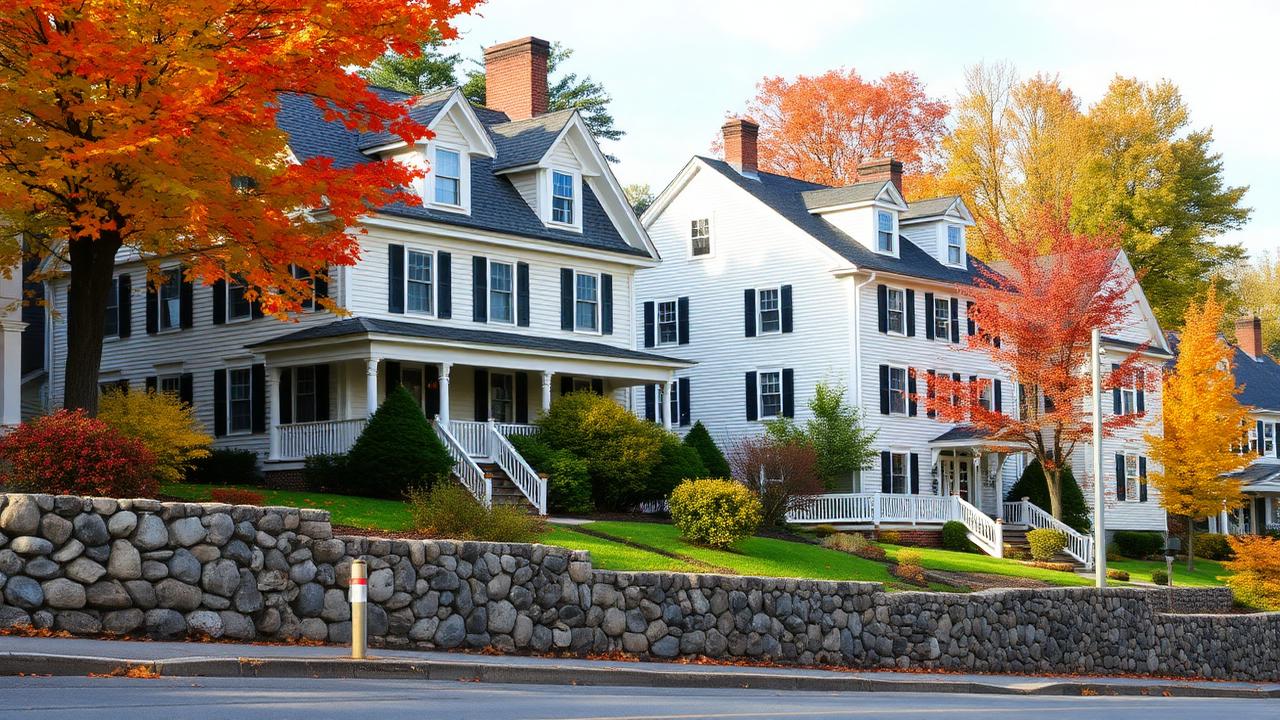
Moving from California to Massachusetts
What Your California Equity Buys in Massachusetts
A straight comparison of price, space, taxes, and monthly cost, plus a closing cost credit when you buy in Massachusetts.
Equity comparison
California versus Massachusetts, side by side
- Typical home price
- $785,000
- $585,000
- Square footage
- 1,650 sq ft
- 1,750 sq ft
- Annual property tax
- $8,600 / year
- $6,900 / year
- Estimated monthly payment
- $4,900
- $4,200
Illustrative statewide medians, replaced with your own figures in the personalized equity report. These figures describe central and western Massachusetts. Inside Route 128 the numbers meet or exceed coastal California, and the equity gain effectively disappears.
Why California homeowners choose Massachusetts
Massachusetts does not fit the equity argument and it would be dishonest to pretend it does. Housing inside greater Boston costs what coastal California costs, the state levies a surtax on income above a high threshold, and the estate tax threshold is one of the lowest in the country. Someone selling in Santa Clara County to buy in Middlesex County is not improving their financial position. They are changing which coast they live on.
What Massachusetts genuinely offers is the best public school system in the country by most measures, world-class hospitals, a dense research and biotech economy, four seasons, and no wildfire risk. Those are real goods and some households will rationally pay for them. Just go in knowing that is the trade. If the goal is to convert equity into margin, Pennsylvania and Tennessee are structurally different arguments.
Two mechanics with real dollar consequences. The surtax on income above the threshold applies to total taxable income in a single year, which means a large one-time capital gain, including the gain on selling a California house after you have established Massachusetts residency, can push you into it. Sequencing your sale and your move matters here. Second, Proposition 2½ limits how much a municipality can raise its levy each year, which is why towns hold override votes for school budgets, and why an override that passes changes your annual bill permanently.
Cost of living versus California
Greater Boston costs roughly what a major California metro costs across housing, childcare, and dining. Central Massachusetts, the Merrimack Valley, and the Pioneer Valley are meaningfully cheaper and are where any real savings live.
Heating is a new expense. Winters are cold and long, and the region's electricity and natural gas rates are among the highest in the continental United States.
Auto insurance and property insurance are moderate, and coastal properties on the Cape and the South Shore carry separate wind deductibles.
- Overall cost index vs California
- Near parity in greater Boston
- Median housing cost
- Lower only outside the Boston metro
- State income tax
- Flat rate plus a surtax on high incomes
- Estate tax threshold
- Among the lowest in the country
Taxes: what actually changes
The base income tax is a flat rate, with an additional surtax on income above a set threshold. Short-term capital gains are taxed at a higher separate rate. For a high earner the total burden is comparable to California's, not obviously better.
Property tax rates are set by municipality and constrained by Proposition 2½. Rates vary widely and the wealthiest towns often have the lowest rates on the highest values, which is the opposite of what newcomers assume.
Social Security is exempt from state income tax. Most other retirement income is taxable.
The estate tax is the item most often missed. The threshold is far below the federal exemption and the tax applies to Massachusetts real property even for people who move away later. Anyone with a substantial California sale behind them should get this reviewed before establishing domicile.
The housing market
Inventory is structurally short. Restrictive local zoning, a short building season, and decades of underbuilding have produced a market where well-priced homes near good schools sell fast and above asking, at price points a Californian will find uncomfortably familiar.
Housing stock is genuinely old. Homes built before 1940 are common, which brings knob-and-tube wiring, lead paint disclosure requirements, buried oil tanks, and asbestos-wrapped ductwork into a routine inspection.
Title and septic rules are stricter than in most states. Title 5 requires a septic system inspection at the time of sale for properties not on municipal sewer, and a failed system means a five-figure replacement before closing.
Where people land in Massachusetts
Worcester
The state's second city, with real housing value and a growing medical sector.
Northampton
Pioneer Valley college town, walkable, progressive, and far cheaper than Boston.
Newburyport
Restored seaport downtown with commuter rail and heavy out-of-state demand.
Quincy
Red Line access to Boston at a discount to the city itself.
Plymouth
Coastal, large lots by Massachusetts standards, and a long commute if you need Boston.
Amherst
Five-college area with a stable rental market and a rural setting.
Get an honest read on a Massachusetts purchase
We will show you what the numbers actually look like, including the cases where this move does not save you money, and introduce you to a vetted local agent. A closing cost credit applies at purchase. Free, with no obligation.
Start your Massachusetts move
Four short questions. We use them to decide which agent fits your move, and to build your equity report.